The great health workforce shift: upskilling for a digital future
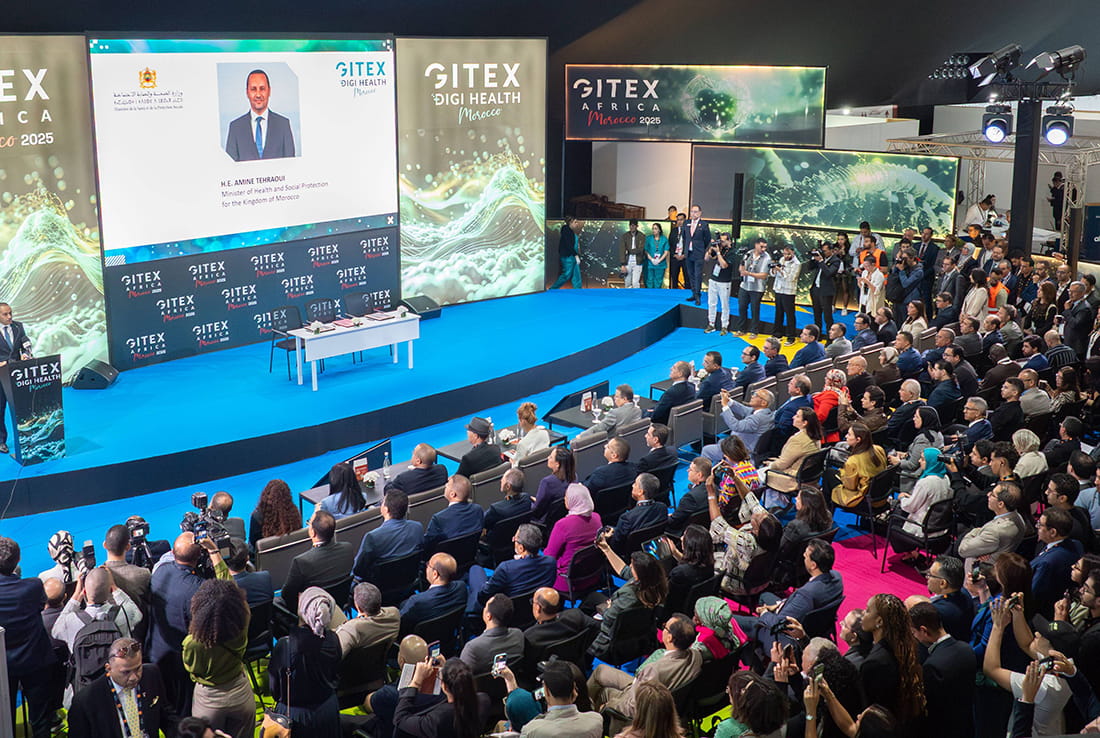
Africa’s health transformation cannot be driven by technology alone - it will be driven by people.
As AI, telemedicine, robotics, digital records and precision diagnostics reshape healthcare across the continent, a
new reality is emerging: digital transformation will never succeed without human transformation.
Africa faces a critical moment. The World Health Organization estimates that the continent will be
short of 6.1 million health workers by 2030, including nurses, midwives, laboratory professionals,
digital health specialists and biomedical engineers. The challenge is no longer just staffing. It is upskilling -
equipping Africa’s workforce with the digital, clinical and soft skills required for next-generation care.
GITEX FUTURE HEALTH AFRICA 2026, held in Morocco, arrives at a defining moment for reshaping the
continent’s talent ecosystem.
Why digital upskilling is now mission-critical
Three major shifts are forcing African health systems to rethink their workforce strategies:
1. Digital health is becoming the default, not the exception
According to WHO Global Health Observatory, over 40
African countries now have national digital health strategies. Electronic health records, AI-backed triage, mobile
health platforms, supply-chain dashboards and telemonitoring require digitally literate health workers at every
level.
2. New technologies demand new skill sets
Robotics-assisted surgery, AI imaging, genomic sequencing, and predictive analytics are entering mainstream hospital
workflows. These require expertise in:
-
digital data entry and validation,
-
cybersecurity awareness,
-
AI interpretation,
-
teleconsultation workflows, and
-
digital ethics.
3. Patient expectations are rising
A digitally connected population expects faster results, remote access, personalised care and transparent
information.
The workforce must adapt, not only technologically, but also culturally.
Morocco’s leadership: human transformation embedded in national reform
As host of GITEX FUTURE HEALTH AFRICA 2026, Morocco offers a strong example of how nations can
integrate workforce transformation into system-wide reform.
The country’s 2023-2027 Health Reform Charter emphasises:
-
expanded medical and nursing-school capacity,
-
continuous digital training for clinicians,
-
modern simulation centres for robotics and surgical training,
-
telemedicine readiness workforce programmes, and
-
professional incentives to retain talent in underserved regions.
Morocco is also accelerating digital literacy programmes linked to the ‘Dossier Médical Partagé’
(shared medical record), ensuring that doctors, pharmacists, nurses and administrative staff can operate electronic
health records.
What “upskilling for a digital future” really means
Africa’s new health workforce needs more than IT training. The transformation spans four pillars:
1. Digital foundational skills for all health workers
Every frontline worker, from community health agents to physicians, needs basic competencies in:
-
electronic documentation,
-
digital record-keeping,
-
teleconsultation processes,
-
data privacy and security,
-
digital triage tools,
-
and mobile diagnostic devices.
Countries such as Kenya and Ghana have
already integrated digital modules into health-worker training programmes.
2. Specialist technical skills for a modern system
These include:
-
biomedical engineering,
-
AI/ML clinical interpretation,
-
genomics and molecular diagnostics,
-
cloud and edge-computing maintenance,
-
telehealth operations,
-
smart-hospital system management.
South Africa’s CSIR runs nationally
recognised biomedical and digital-health engineering programmes.
Egypt, Morocco and Rwanda are also scaling simulation centres for robotics, imaging and critical-care training.
3. Soft skills: the human side of digital care
Humanising technology is essential. Communication, empathy, and cultural awareness are key to maintain patient trust
during digitalisation. Digital tools do not reduce the importance of human contact: they heighten it.
4. Leadership and change management
Hospital managers and policymakers must learn to:
-
manage digital transformation pathways,
-
adopt interoperable tools,
-
measure outcomes,
-
integrate AI safely,
-
and foster a culture of data quality.
The WHO Digital Health Atlas provides training modules for health leaders adopting national digital
tools.
Case studies: Africa’s workforce innovation in action
1. Rwanda - a national digital-upskilling mandate
Through its Health Information Systems programme, Rwanda trains community health workers on digital record-keeping, mobile triage tools and
population data dashboards. The country’s strong digital backbone makes it a continental benchmark.
2. Egypt - robotics and precision medicine training hubs
Egypt is investing in teaching hospitals equipped with robotic surgery, genomic sequencing units and AI imaging
systems.
Training programmes support surgeons, anaesthetists, nurses and biomedical engineers.
3. South Africa - specialist digital-health talent pipeline
South Africa’s universities offer accredited degrees in biomedical engineering, digital pathology and health
informatics - critical for supporting AI and smart-hospital adoption.
4. Nigeria - telemedicine and digital health entrepreneurship
Nigeria’s fast-growing digital health sector is generating new roles: telehealth coordinators, digital claims
officers, remote monitoring assistants and AI-screening technicians.
Challenges and bottlenecks
As African countries are starting their journey on digital health and digital health upskilling for African health
professionals, it is realistic to consider what could be the possible constraints to overcome for steady progress.
1. Unequal digital literacy
Urban hospitals adapt quickly; rural clinics often lack training capacity.
2. Power and connectivity constraints
With 43% of sub-Saharan Africans lacking reliable electricity, digital workflows require
solar-backed systems and offline-first apps.
3. High migration of skilled workers
Africa loses thousands of nurses and physicians annually to international recruitment (OECD Migration Data: https://www.oecd.org/migration/) As one of the most affected sectors, health should become a
priority in the brain drain retention strategies of African governments, as well as building a work environment that
encourages African diasporas to come back and share their expertise with the continent.
4. Limited training capacity
Simulation labs, genomic centres and AI training environments remain scarce. Eventhough the salaries cannot be
compared to those earned in high-income countries, stimulating work environments can definitely be a strong argument
to attract and retain African talents and experts looking for a fulfilling career ‘at home’.
The future workforce: blended skills for a blended reality
The next decade will see the rise of hybrid professionals:
-
AI-augmented clinicians
-
Bioinformaticians
-
Telehealth nurses
-
Robotics technicians
-
Digital supply-chain coordinators
-
Mobile diagnostics operators
These roles will define Africa’s future health system.
A transformational opportunity lies in public-private partnerships, with tech companies, telecom
operators, universities and health ministries co-developing talent pathways.
Toward GITEX FUTURE HEALTH AFRICA 2026
At GITEX FUTURE HEALTH AFRICA 2026 in Morocco, the health workforce will be one of the flagship agenda pillars.
Key themes expected:
-
AI-literate clinician training programmes,
-
robotics and simulation-based learning,
-
telemedicine workforce models,
-
genomics and precision-care competencies,
-
digital leadership for hospital executives,
-
youth talent pipelines for Africa’s medtech sector.
Conclusion
It’s a fact: Africa’s digital health revolution will be people-powered.
As technology accelerates, the continent’s most urgent task is preparing a workforce equipped not only with technical
knowledge but also with empathy, adaptability and digital fluency. Morocco’s reform agenda shows that human
transformation can move as fast as technological innovation, when backed by political commitment and strategic
investment.
GITEX FUTURE HEALTH AFRICA 2026 will showcase how African countries are rewriting the talent playbook, ensuring that
the next generation of clinicians, engineers, analysts and caregivers is ready for a digital future.